Common Mistakes to Avoid in Commercial Property Appraisal in Elgin County
Commercial values in Elgin County do not move in lockstep with Toronto, London, or even Woodstock. The county’s mix of small urban nodes, rural townships, and highway corridors produces a market that is thin in some property types and suddenly active in others. If you are ordering or performing a commercial property appraisal in Elgin County, the toughest mistakes often stem from treating a local, relationship driven market as if it were data rich and homogenous. The differences seem subtle at first. They show up in lease forms that are not quite standard, in tax loads that swing value by hundreds of thousands, in servicing constraints that block a highest and best use you assumed was a given.
What follows draws on files across Central Elgin, Aylmer, Bayham, Malahide, West Elgin, Dutton Dunwich, and Southwold, plus the gravitational pull of St. Thomas. It focuses on avoidable missteps and the practices that keep numbers defensible when lenders, auditors, or courts read them line by line.
The small market problem, and why it matters
In a large metro, you can triangulate value from a dozen clean comparables and still have backup. In Elgin County, you might have two trades in the same use class in the last year, and both come with quirks. One includes a partial vendor take back. The other pairs with an off market equipment sale. You can still produce a credible opinion, but you need to spend more time on verification, adjust more cautiously, and, when necessary, extend the search in both time and geography without losing local relevance.
Commercial appraisal services in Elgin County also operate beside a separate property assessment regime. MPAC performs mass appraisal for taxation, and that assessed value sometimes ends up in lender files as if it were market value. It is not. A commercial property assessment in Elgin County informs taxes and recoveries, which affect net income and therefore value, but the assessed number itself cannot replace an appraisal prepared to CUSPAP standards.
Mistake 1: Porting big city cap rates to a smaller, segmented market
A casual reader might believe that a stabilized Class B industrial building in any Ontario market trades at roughly the same capitalization rate, give or take 50 basis points. That shortcut fails quickly in Elgin County. Investor pools are thinner, risk appetites vary block to block, and lease structures are not as uniform. A one to two percent spread in cap rates across seemingly similar properties is common once you account for tenant profile, age, location relative to Highway 401, and building functionality.
For example, a 25,000 square foot industrial box with clear heights under 20 feet and limited loading in a rural industrial park can trade at a materially higher yield than a similar box with modern specs near the 401. Add a single tenant with a private covenant and short remaining term, and the yield shifts again. If you treat a recent 6.25 percent London sale as a plug for a rural Elgin asset, you will miss the real risk premium that local buyers demand. A commercial appraiser in Elgin County should bracket yields with evidence from the immediate county where possible and then widen the circle to St. Thomas, London, Tillsonburg, and Woodstock with transparent adjustments for covenant, location, and spec.
Mistake 2: Treating MPAC assessed value as market value
This one shows up often in financing requests. A borrower points to the MPAC assessment and argues that taxes are based on it, therefore it must approximate value. While MPAC’s mass appraisal approach is rigorous for its purpose, it is not a substitute for a point in time valuation that reflects lease terms, vacancy, capital needs, and most importantly, the actual exposure and negotiation of a property in the current market.
MPAC’s assessed value can be two to four years out of step with the market cycle. It also normalizes idiosyncrasies that have real pricing impact. Think of a dated flex building with high office buildout and significant functional obsolescence. MPAC’s cost model may not capture the penalty that local buyers in Elgin County apply to excess office, especially where retrofit costs are high and achievable rents do not support them. Use MPAC for what it does best, which is establishing the tax base and providing roll details, but appraise based on real income, real risk, and current investor expectations.
Mistake 3: Skipping a genuine highest and best use analysis
Elgin County is in transition. The county’s agricultural backbone remains strong, yet the industrial and logistics story along Highway 401 and around St. Thomas has accelerated. Announced large scale manufacturing investment in the St. Thomas area has already nudged land prices and lease-up velocity, even where municipal boundaries differ. If you assume that the current use is the highest and best use without testing reasonable alternative uses, you will miss value inflection points.
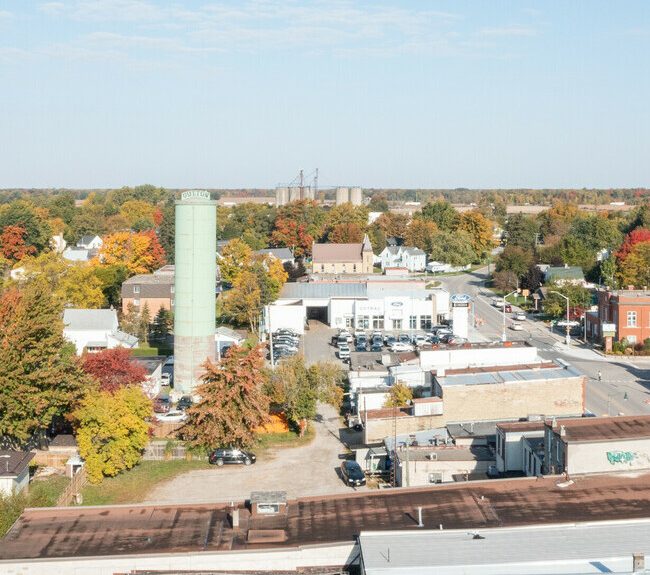
I have seen marginal retail strips on commuter routes justified as retail simply because they have always been retail. A proper highest and best use analysis asks whether those units would generate more value as service industrial or even redeveloped mixed commercial, subject to zoning and servicing. On the rural side, a farm parcel near an interchange with fragmented field layout and surplus frontage may carry a partial industrial or commercial land use in the medium term, yet an ag-only lens ignores that option value. Appraisers do not have a crystal ball, but they do need to evaluate legally permissible, physically possible, financially feasible uses and conclude the maximally productive one with transparent reasoning.
Mistake 4: Forcing comparables too close, or far beyond relevance
When you operate in a data sparse setting, it is tempting either to cling to the one nearby transaction regardless of fit or to range so far that you import a different market. Both cause errors. A county plaza with mostly local service tenants will not price like a suburban plaza in northwest London with national covenants and higher trade area incomes, even if the cap rate headline looks similar. The reverse also holds. A clean industrial sale 15 minutes up Highway 401 may be more relevant to a Dutton Dunwich warehouse than an older in town structure that has not transacted in years.

When I widen a sales search for a commercial real estate appraisal in Elgin County, I do it in steps, first to adjacent municipalities with similar economic drivers, then to peer corridors along 401 within a reasonable commute. I also time bracket with caution, recognizing that interest rate shifts since 2022 have repriced income streams and reset buyer return thresholds.
Here is a short framework I use to avoid bad comps drift:
- Start with the county and St. Thomas, same use and similar specs, within 18 to 24 months. Verify privately if the MLS or registry notes are thin.
- Expand to adjacent towns that share the same highway or labor pool, checking tenant covenant and lease structure closely.
- If still thin, include older trades or more distant markets, but apply time and risk adjustments transparently and explain the logic in plain language.
Mistake 5: Ignoring municipal servicing, zoning, and approval realities
Land in Elgin County does not automatically enjoy the water, wastewater, and road capacity you might expect in a big city suburb. I have appraised industrial parcels where a buyer’s pro forma assumed municipal sewer that is several years and millions of dollars away, requiring interim septic that cut achievable density in half. Zoning bylaws differ materially across municipalities, and conservation authorities such as Kettle Creek, Long Point Region, and Lower Thames Valley add overlay constraints along watercourses and wetlands.
If you are appraising land on the edge of St. Thomas, check servicing allocation, not just the line on the map. If you are valuing an existing building in Central Elgin, confirm the site plan’s legal parking count and whether additions were permitted or only tolerated. On rural highway commercial sites, MTO access permits can define what is actually feasible. The highest and best use answer can flip when you layer these realities into the workbook.
Mistake 6: Overlooking excess land, surplus land, and awkward configurations
A common oversight in commercial property appraisal in Elgin County is to treat a large site as if every square foot supports the existing improvements at the same intensity. Excess land is land that is not necessary to support the existing improvements and is capable of separate development. Surplus land is not necessary to support existing improvements but cannot be sold off separately. The difference matters to value and to lenders. An older industrial building on a 5 acre site with a modest footprint might have two acres of excess land along the flank that carry real market value, particularly where zoning permits outdoor storage or a separate building pad. If servicing or access blocks separate development, then it may be surplus land with only use value to the current site.
In rural nodes, I also see back lot depths that exceed functional loading and trailer storage needs. Buyers do not pay the same per acre for that extra land as they do for the acre under the building. Appraisers need to segment value in their analysis rather than smear it across the site.
Mistake 7: Misreading lease structures and underestimating inducements
Textbook net leases with clean recoveries are not as universal in Elgin County as marketing sheets suggest. You will encounter semi gross leases where the landlord covers some or all property management, minor maintenance, or even snow removal. Caps on controllable expenses show up, as do bases that lag actuals for years. Tenant inducements are embedded in several ways. I routinely see free rent periods disguised as stepped rents or landlord completed improvements that are not normalized in the face rate.
When you underwrite income, you need to normalize to an effective rent that nets out inducements, load vacancy and credit loss that reflect the local depth of demand, and incorporate a non recoverable allowance for real costs that owners carry. In a small market, excessive optimism about backfilling time can overshoot value by a wide margin. A realistic marketing period for a mid sized industrial unit may still be several months, even in a tight market, if specs are odd or access is poor.

Mistake 8: Thin income approach workups with weak expense assumptions
A project file can look tidy with pro forma lines for taxes, insurance, and management, but the credibility lives in the details. Property taxes in Elgin County vary widely with assessment class and mill rate by municipality. A one dollar per square foot swing in taxes is enough to move a cap rate derived value by 50 to 150 basis points in some cases. You need to model recoveries aligned with the leases and calibrate a stabilized tax load, not just last year’s bill.
Other recurring gaps:
- No reserve for replacement on roofs, parking areas, or mechanical systems, even where age and condition demand it within the hold period buyers use in pricing.
- Unrealistic management fees in owner operated buildings. Market participants price management even if the current owner self manages.
A defensible commercial appraisal in Elgin County reads like a buyer’s underwriting that will pass internal credit committee questions. That means transparent assumptions, local evidence on vacancy and non recoverables, and direct ties to lease abstracts and invoices you reviewed.
Mistake 9: Using the cost approach mechanically
The cost approach can add real insight, especially for special purpose or newer buildings. It can also mislead if you feed it generic numbers. Replacement cost new needs to reflect local construction realities. In Elgin County you see meaningful swings in site work costs due to soil conditions, rural drainage issues, and utility extensions. Soft costs and entrepreneurial profit should not be ignored where the project requires development risk that a market participant would price.
Depreciation must go beyond straight line. Physical depreciation may be light on a ten year old building, but functional obsolescence can be heavy if the clear height, loading, or bay spacing miss current tenant requirements. External obsolescence is often the third rail. A perfectly fine building can still warrant an external obsolescence deduction if off site factors depress income potential, such as limited nearby labor, poor exposure, or a cluster of competing space that keeps rents capped.
Mistake 10: Underestimating environmental, agricultural, and rural constraints
Legacy uses matter. A small town automotive repair shop with underground tanks pulled a decade ago may still carry stigma that buyers demand a discount to accept. A Phase I ESA is table stakes in many lender assignments, and the appraiser must align the valuation with the known status. If the conclusion assumes a clean Phase II that has not yet been completed, say so and label it an extraordinary assumption with the associated risk.
On agricultural and rural commercial properties, details like tile drainage, soil class, and access to markets drive value more than glossy aerials. Minimum Distance Separation rules can limit new livestock facilities near settlements, which matters when highest and best use toggles between farm expansion and rural commercial. Wind or pipeline easements also show up across the county. They restrict siting and can trigger partial interest or injurious affection concerns that belong in the analysis, not in the fine print.
Mistake 11: Blurring as is and as if complete values, and hiding extraordinary assumptions
Developers and lenders often ask for both an as is and an as if complete value. The gap between them hinges on cost to complete, time, and risk. If a warehouse shell in Aylmer is 70 percent done, you cannot plug in the contractor’s estimate and apply the same cap rate to the future income. You need to price the time to stabilize, carry costs, and the market’s required return for that timeline. If your opinion of as is value assumes the building will be completed per plans on current permits, label it an extraordinary assumption, and spell out what happens to value if the assumption fails. Sophisticated readers accept qualified scenarios. They do not accept hidden ones.
Mistake 12: Forgetting exposure and marketing time metrics
Lenders and auditors in Ontario expect reasonable exposure time and marketing time statements. In a thin market, those numbers are not constant. A stabilized highway commercial pad with a national tenant may have a marketing time of a few months if priced properly. A single tenant industrial with a private covenant and an overbuilt office component may take longer, even in a tight vacancy environment. If you default to a single three to six month statement across asset classes, you are not reflecting Elgin County’s real dynamics. Support the numbers with broker interviews and your own file history.
Mistake 13: Weak verification and insufficient documentation
The sales that do exist in Elgin County often involve private negotiations. Registry data captures price, parties, and legal description, but leaves out vendor take backs, equipment allocations, or leasebacks that drive pricing. A commercial appraiser in Elgin County needs to verify details with parties on both sides where possible, or with the listing and buying brokers who can speak to adjustments. Email trails, call notes, and copies of offering memoranda, when available, give your report the spine it needs when someone challenges an adjustment later.
Supporting documents also matter for land and improved valuations. Site plans, zoning certificates, servicing letters, and environmental reports should live in your workfile, not just as references. If the subject relies on a conservation authority permit or a road access approval, gather it. The argument that everyone knows how it works around here does not stand up under external review.
Local context that shapes value today
Elgin County’s market backdrop includes several forces worth weighing in assignments this year.
Industrial and logistics, especially around St. Thomas and Highway 401, benefit from regional manufacturing momentum. Announced large scale battery and automotive supply chain investments have tightened expectations for modern industrial space. That enthusiasm does not erase functional deficits in older buildings. It does shorten lease up assumptions for good boxes in the right nodes.
Retail is uneven. Downtown main streets in smaller towns see steady local service demand, but rents can be thin and tenant improvements heavy. Highway commercial near interchanges retains appeal for automotive and quick service food, but zoning, access, and signage rules can create winners and losers on the same strip.
Office is modest in scale and tends to follow direct user needs. Investors will price short remaining terms with private covenants cautiously. Build to suit office or medical deals can work, but cap rates and residual risk need to reflect exit realities in small centers.
Agricultural land remains a pillar. Soil quality, parcel shape, and tile drainage define value more than speculation in most townships. Transitional land near serviced boundaries and interchanges does attract attention, yet timelines and infrastructure costs often surprise buyers who thought a zoning change was simple.
Practical checks that keep you out of trouble
A short checklist, tailored to this county, tends https://jsbin.com/?html,output to prevent most errors:
- Confirm servicing status and capacity in writing, not just on an engineering drawing from three years ago.
- Verify leases beyond the summary sheet, including side letters, inducements, and caps on recoveries.
- Call both sides on key sales, and reconcile conflicting accounts with documented adjustments.
- Segment site value for excess or surplus land instead of blending it into the income at the same rate.
- State extraordinary assumptions plainly, and model their impact on value ranges, not single points.
Working with a local professional, and what to expect
Buyers, lenders, and owners who engage commercial appraisal services in Elgin County often ask how a local practitioner adds value beyond standard models. The answer is pattern recognition and verification networks. A commercial appraiser in Elgin County knows which industrial park carries a quiet reputation for tricky truck movements in winter, which main street buildings hide unpermitted mezzanines, and which landlord uses a lease template that shifts snow removal back to the owner despite a net headline. Those details make or break a capitalization rate or a discount rate decision.
Expect a process that spends real time in the field. Roofs and parking areas tell stories in person that photos miss. Expect a broader but carefully explained set of comparables. In a small market, you cannot afford to cherry pick only the two neatest trades. Expect explicit discussion of tax loads, recoveries, and reserves, with local invoices and broker interviews to anchor them. And expect the report to read like it was written for a credit committee that asks sharp, practical questions rather than a form letter.
Bringing it together without shortcuts
A credible commercial property appraisal in Elgin County sits on three legs. First, a disciplined highest and best use analysis that respects zoning, servicing, and real demand. Second, income, sales, or cost approaches that are calibrated to local evidence, not generic province wide assumptions. Third, transparent documentation and qualified statements where the market is thin or the future is assumed. Each leg matters more in a county where a single outlier deal can swing perceptions for months.
The temptation to rush grows when timelines are tight or when a client tries to map a big city template onto a small market. Resist it. If a tenant mix is half local entrepreneurs with quirky clauses, say so and price the risk. If an industrial building on a beautiful five acre site only needs two acres to function, value the extra land explicitly. If you must pull a comparable from 40 minutes up the highway, explain the why and the adjustments in numbers and in words that a non appraiser can follow.
Do that consistently, and your work will stand up to the second and third reads. More importantly, it will help clients make decisions that fit the county they are actually in, not the one they imagined when they opened a cap rate survey for somewhere else. That is the point of professional appraisal, and it is how commercial appraisal services in Elgin County build trust one file at a time.