The Role of Commercial Real Estate Appraisers in Cambridge, Ontario for Litigation Support
Litigation rarely turns on hunches. When the dispute involves value, courts and tribunals expect methodical analysis, transparent assumptions, and an expert who can explain complex market dynamics in plain language. In Cambridge, Ontario, commercial real estate appraisers sit at the center of that effort, translating market evidence into defensible opinions that help resolve conflicts before trial or withstand cross-examination if settlement fails.
The work is not abstract. Consider an expropriation tied to a Highway 401 interchange improvement, a rent reset on a multi-tenant industrial building along Franklin Boulevard, or a shareholder buyout affecting a downtown Galt mixed-use property within a heritage district. Each matter demands local knowledge, discipline under the Canadian Uniform Standards of Professional Appraisal Practice, and the capacity to communicate risk and judgment without advocacy. That is where experienced commercial real estate appraisers in Cambridge, Ontario earn their keep.
Why litigation support is different from ordinary valuation
An appraisal for financing or financial reporting focuses on a defined date and a reasonably probable exchange price. Litigation changes the frame. The opinion often speaks to value at more than one relevant date, for example date of taking and date of hearing in expropriation, or multiple rent reset anniversaries. It may require modeling alternate use cases, assessing diminution due to stigma, or unpacking complex lease structures. Disclosure obligations also rise: counsel on both sides will expect a workfile that allows replication of calculations and inspection of every assumption. Independence becomes non-negotiable.
A commercial appraiser in Cambridge, Ontario who handles litigation work builds reports to withstand discovery, Rule 53.03 in Ontario for expert reports, and cross-examination. The analysis takes longer, the writing is tighter, and the scope of work is more explicit. When a judge or tribunal member asks why a 25-basis-point change in the cap rate moves value by hundreds of thousands of dollars, the expert should answer without reaching for notes.
The local market context matters
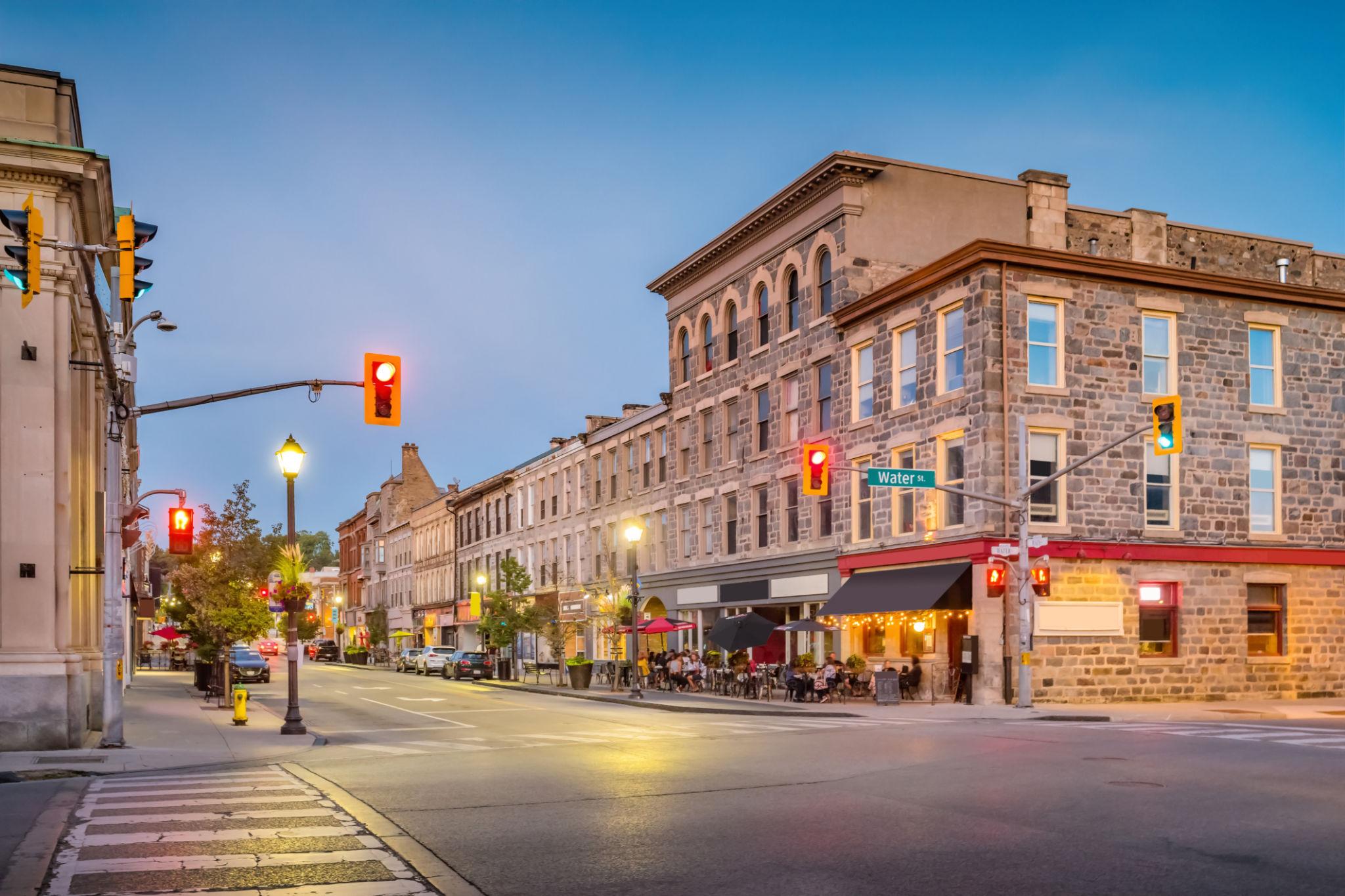
Cambridge is not Toronto, and it is not rural Oxford County either. It sits in the Waterloo Region economy with quick access to the 401, a diversified industrial base, spillover from the tech ecosystem, and a robust small business community. The three historic cores, Galt, Preston, and Hespeler, shape commercial patterns differently than a monocentric city. Downtown Galt offers heritage fabric, constrained supply, and a walkable environment along the Grand River. Preston and Hespeler bring their own main streets and a mix of older industrial stock. Industrial users prize locations near Highway 401, Pinebush Road, and the Franklin Boulevard corridor for logistics, light manufacturing, and flex space.

Floodplain considerations along the Grand River and its tributaries affect development potential and insurability for select parcels. The Grand River Conservation Authority’s regulated areas can limit buildable area or trigger mitigation costs that ripple into value. Zoning and Official Plan designations, heritage conservation districts, and site plan agreements shape highest and best use in a way that is specific to Cambridge. A commercial property appraisal in Cambridge, Ontario benefits from hands-on familiarity with the City’s planning staff, the zoning by-law and its consolidation history, and the practical pace of approvals.
Vacancy, achievable rents, and investment yields diverge across submarkets. Industrial vacancy has trended low in many recent years, sometimes below 2 percent in the 401 corridor, while office performance remains bifurcated, with stabilized suburban medical and government-tenanted assets performing well compared with older commodity offices. Retail follows its own logic: grocery-anchored centers remain resilient, but small-bay streetfront retail responds to pedestrian counts, parking, and co-tenancy. Litigation appraisals must capture those nuances instead of relying on regional averages.
Common dispute types and the appraiser’s role
In litigation and quasi-judicial processes, commercial real estate appraisers in Cambridge, Ontario take on a defined function: provide an impartial, supportable valuation or diminution in value. The matter drives the method.
Expropriation and partial takings. Under the Ontario Expropriations Act, compensation can include market value, injurious affection, business losses, and disturbance damages. A partial taking near a 401 interchange might strip parking or loading access from a multi-tenant industrial site, depressing achievable rents and re-tenanting options. The appraiser evaluates before and after scenarios, confirms the highest and best use under both states, and isolates the difference attributable to the taking. It is not unusual to run site coverage and loading ratio analyses or to develop a rent roll reforecast for the after state.
Lease disputes and rent arbitration. Net effective rent is not a headline number. Caps, free rent, tenant improvements, escalation formulas, percentage rent, and inducements matter. When a retail landlord and tenant disagree on fair market rent for an option renewal, the commercial appraiser deconstructs comparable transactions into net effective terms, isolates the market trend, and applies it to the subject with specific adjustments for co-tenancy, signage, and exposure. For industrial leases, loading door count, clear height, and power capacity carry weight.
Shareholder and partnership disputes. If a partner wants out, everyone wants a number. Discounts for lack of marketability or control might arise at the business valuation layer, but the underlying real estate value must be solid first. For a private company that owns a small portfolio of Cambridge industrial condos or a single-tenant building, the appraiser builds a value by direct capitalization, tests it against sales, and explains how lease terms, tenant covenant strength, and renewal probabilities affect yield.
Matrimonial and estate litigation. Not glamorous, but common. Here the appraiser often values partial interests, backdates to a marriage date or separation date, and assesses whether the property was income producing, owner occupied, or development land at each date. Documentation quality varies widely, so the expert’s ability to reconstruct a credible history matters.
Environmental contamination and stigma. If a solvent plume or historical dry cleaner use affects a downtown strip property near one of the cores, the issue might not be mere remediation cost but market stigma even after cleanup. The appraiser weighs comparable sales evidence with environmental context, tests rent impact, and where data is thin, uses a reasoned, conservative adjustment anchored to published studies and local broker behavior.
Construction defects and delay claims. A project loses a season because of permitting delays or latent defects in the building envelope. The question becomes the difference between expected stabilized value and actual market position, net of mitigation. The appraiser’s job is to tease out how lost time, added capital expenditures, and missed absorption windows influenced value.
Standards, independence, and the expert’s duty
Litigation experts in Ontario operate under two regimes. Professional practice is governed by the Appraisal Institute of Canada’s CUSPAP, including report types, scope of work, ethics, and record retention. Court and tribunal practice is governed by the expert’s duty to the court, typically documented in an acknowledgment under Ontario’s Rules of Civil Procedure. That duty puts independence ahead of client preference. Strategic framing belongs to counsel, not to the appraiser.
Designations matter in court. An AACI, P.App who focuses on commercial assets is standard for complex litigation. A qualified commercial appraiser in Cambridge, Ontario will be comfortable preparing narrative reports, rebuttals, and joint memoranda where the court encourages experts to narrow issues. Some tribunals use settlement-focused processes where experts meet to identify points of agreement. Clear writing and willingness to explain methods without jargon often move cases toward resolution.
Evidence, data, and the Cambridge lens
Good data wins cases quietly. A commercial real estate appraisal in Cambridge, Ontario should show how each key conclusion emerges from market evidence. That https://connerghna629.wpsuo.com/how-to-choose-commercial-building-appraisers-cambridge-ontario-for-industrial-assets means assembling and vetting data from:
- Municipal sources, including Official Plan schedules, zoning by-law text and maps, building permits, and committee of adjustment decisions for variances and consents.
- Provincial and registry sources, including land registry documents, Teranet or GeoWarehouse title data, and historical transfers.
- Market databases and broker channels, such as local MLS for small commercial, specialized platforms for investment sales, and direct interviews with active brokers who close Cambridge deals.
- Third-party research on capitalization rates, rent bands, and industrial metrics, tested against what local deals actually show.
- Fieldwork, including site measurements, parking counts, loading and access assessment, and neighborhood observation at different times of day. The difference between a workable loading court and a congested one is a rent issue, not a cosmetic one.
In litigation, counsel will ask to see raw comps, adjustment grids, and rent models. The workfile must be complete, from market rent comparables for each suite to confirmation emails or recorded calls that verify sale conditions. An expert who has actually walked Preston’s main street and driven the Hespeler industrial pockets can answer place-specific questions that an out-of-town generalist might miss.
Methods that carry weight under challenge
No single approach fits every matter. The appraiser should choose methods that match property type, data availability, and dispute questions.
Sales comparison. Useful for single-tenant buildings when comparable sales exist, for small retail and industrial condos, and for land. Adjustments need to be transparent and tied to observable differences. For land, density, servicing status, and timing of approvals control value. Where sales are sparse, a residual land value cross-check can test plausibility.
Income capitalization. For income-producing assets, direct capitalization with a market-derived cap rate remains the workhorse. Rent modeling must separate base rent, step-ups, recoveries, and non-recoverable costs. Allowances for vacancy, collection loss, and structural reserves should reflect Cambridge evidence first, then broader regional trends if local support is thin. Discounted cash flow helps when lease expiries, capital projects, or absorption create a non-stabilized path to value.
Cost approach. Industrial with specialized improvements, newer construction where depreciation is estimable, and some institutional assets may invite a cost approach, primarily as a support. Land value and hard and soft costs must reflect Cambridge realities, not a generic provincial benchmark. External obsolescence, such as locational limitations or post-pandemic office demand shifts, typically shows up here.
Before and after analysis. In partial takings and injurious affection, the before state and after state each require a full highest and best use test and a valuation. The delta is not simply area taken multiplied by unit value. Loss of parking that triggers non-conformity, reduction in visibility, or impaired access can alter rent, yield, or both.
Diminution due to stigma. Here the method blends sales comparison with reasoned judgment. If few directly comparable contaminated sales exist in Cambridge, the expert may widen the search radius and time window, then calibrate adjustments using studies that examine stigma persistence after remediation. The final adjustment should be conservative, documented, and subjected to sensitivity tests.
Highest and best use under Cambridge constraints
Highest and best use analysis is more than a preface. In Cambridge, heritage overlays, floodplain limits, and zoning setbacks constrain redevelopment options. For a downtown Galt parcel, height limits, step-backs near the river, and parking ratios change density. In Preston and Hespeler, older industrial lands might transition to mixed-use or flex uses if zoning permits and market demand supports it, but servicing and environmental cleanup costs can erode feasibility.
A careful analysis addresses legal permissibility, physical possibility, financial feasibility, and maximum productivity. On a small site, a one-storey retail pad might beat a mid-rise on risk-adjusted return if pre-leasing is achievable for the former and remote for the latter. Litigation frequently turns on the version of highest and best use adopted. An opinion that assumes a density the City is unlikely to approve, or ignores conservation authority constraints, invites attack.
Working with counsel, from retainer to testimony
Early alignment with counsel saves money and confusion. Counsel defines the legal question. The commercial appraisal services in Cambridge, Ontario translate that into a scope of work: effective dates, property interests, extraordinary assumptions, and limiting conditions. Site access, document production, and confidentiality around tenant information should be nailed down in writing.
Discovery rules drive deliverables. Expect to produce a full narrative report, an electronic workfile, and the expert’s acknowledgment of duty to the court. Rebuttal assignments often require tight turnaround and focused commentary on an opposing expert’s key assumptions, data reliability, and internal consistency. The most effective rebuttals show where two appraisers agree and highlight the narrow points of genuine disagreement.
Cross-examination preparation is practical, not theatrical. An appraiser should be able to show, for example, how a 50-basis-point cap rate range would affect the value of a 45,000 square foot industrial building with net operating income of 540,000 dollars. Judges appreciate a clean sensitivity table and a simple explanation of why the selected point in the range best reflects the subject’s lease rollover, tenant covenant, and functional attributes.
What information to assemble for your appraiser
Busy litigators sometimes assume that all needed documents sit in public records. Not so. The client often controls the most relevant details. To accelerate a defensible commercial real estate appraisal in Cambridge, Ontario, assemble:
- Executed leases, amendments, and estoppels, plus a current rent roll with recoveries and arrears.
- Capital expenditure history, building condition or environmental reports, and any open work orders.
- Site plans, surveys, and any correspondence with the City or GRCA that may affect use or approvals.
- Historical financials at the property level, ideally three to five years, with notes on anomalies such as one-time repairs or insurance recoveries.
- Transactional context, including purchase offers, marketing history, and broker opinion letters if available.
When documents are missing, say so early. A credible analysis can often proceed with reasonable extraordinary assumptions, but counsel must understand the risk those assumptions introduce.
Timelines, fees, and scope management
Litigation appraisals take time. For a typical single-asset assignment, two to four weeks from retainer to draft is common, stretching to six or eight weeks if multiple effective dates, complex leasing, or environmental issues arise. Expropriation or multi-asset portfolio files can run longer. Rush jobs are possible, but they come with higher fees and greater risk of discovery friction if data arrives late.
Fee structures usually reflect hours rather than pure fixed fees, though some commercial appraisers in Cambridge, Ontario will quote a base fee with a cap for defined scope. Expect a premium for testimony days, discovery, and travel. Rebuttal assignments may be more cost effective because of the narrower scope, but do not assume they are quick if the opposing report is voluminous.
Scope creep hides in innocuous requests. A lawyer who asks for one more effective date, or a second scenario with alternate zoning, may not realize that the model must be rebuilt. Clear change-order practices preserve relationships and budgets.
Case snapshots from the 401 corridor
A partial taking altered truck movements at a multi-tenant industrial complex near the Franklin Boulevard and 401 interchange. The owner argued that loss of a drive-through lane would reduce achievable rents for two bays by 0.50 to 0.75 dollars per square foot and increase downtime between tenants. The appraiser documented average downtime for similar spaces in the corridor, interviewed brokers on rent sensitivity to loading constraints, and modeled a mixed impact: flat face rent but an extra month of downtime and slightly higher free rent. The before and after analysis produced a diminution range rather than a single point early in negotiations. That range created room for settlement without a hearing.
On a downtown main street, a landlord and tenant disputed fair market rent at option renewal in a heritage building. The tenant pointed to weaker foot traffic; the landlord referenced new residential nearby and stable co-tenancy. The commercial appraiser broke down comparable leases into net effective rents and made small but cumulative adjustments: superior frontage for one comp, inferior ceiling height for another, and a 2 percent upward adjustment for corner exposure at the subject. The final opinion came in close to the midpoint, and the parties accepted it as a basis for a modified rent and a short extension.
A small industrial site backing onto a regulated watercourse faced redevelopment expectations. The owner’s consultant envisioned a larger building than the site could practically support once floodplain cut-and-fill and setback needs were accounted for. The appraiser’s highest and best use analysis, supported by discussions with City planning staff and reference to conservation constraints, reduced the assumed buildable area by approximately 15 percent. The change materially affected land value and undermined an inflated damages claim.
Pitfalls that weaken expert evidence
Overreliance on regional data. Waterloo Region trends are useful, but Cambridge has pockets that behave differently. A cap rate pulled from a Kitchener office tower sale will not explain yields for a two-storey office over retail near Hespeler’s core.
Ignoring the workhorse math. Income-producing property value hinges on rent, expenses, cap rate, and adjustments for vacancy and reserves. A tight narrative without a clear model invites skepticism.
Unstated extraordinary assumptions. If a valuation assumes that a minor variance will be granted, or that environmental issues are resolved, that must be explicit. Courts do not like surprises.
Thin adjustment support. A 10 percent adjustment for location needs more than a wave. Show the pattern across multiple comparables or reference measured differences such as traffic counts, co-tenancy strength, and parking ratios.
Advocacy tone. Experts who shade language or overstate certainty get less traction. Under cross-examination, moderation reads as credibility.
A short map of the litigation appraisal process
- Define the legal question with counsel, confirm effective dates and the property interest to be valued.
- Scope the assignment, secure access, assemble documents, and record any required extraordinary assumptions.
- Inspect the property and competing sets, confirm zoning and regulatory constraints, and build the market data file.
- Model value using the appropriate approaches, test sensitivity, and write a narrative that connects evidence to conclusions.
- Deliver the report, address questions, prepare for discovery and, if needed, testimony, including rebuttal of opposing evidence.
When to retain a commercial appraiser in Cambridge
Early. Retaining a commercial appraiser in Cambridge, Ontario at the outset allows counsel to shape pleadings and settlement strategy with realistic numbers. For expropriation, the expert can flag issues with site access or functional utility that might alter temporary access arrangements during construction. In lease disputes, an early rent study sets expectations and keeps parties within a viable bargaining range. For shareholder disputes, a preliminary desktop range can inform whether mediation makes sense before a full narrative report is required.

Appraisers are not business valuators, and vice versa. For an operating company whose value wraps around real estate it occupies, counsel may need both, with careful coordination so the real estate component is not double counted or overlooked. Clarity on roles prevents wasted time and conflicting opinions.
How keywords and clarity intersect
Readers searching for commercial appraisal services in Cambridge, Ontario usually want three things: genuine local knowledge, courtroom-tested reporting, and transparent fees. A credible commercial property appraisal in Cambridge, Ontario will reflect the city’s market dynamics, from industrial vacancy near the 401 to heritage impacts in the cores. Experienced commercial real estate appraisers in Cambridge, Ontario understand how to translate that knowledge into litigation-ready reports that hold up when challenged.
The label matters less than the substance. Whether you search for a commercial appraiser in Cambridge, Ontario or a firm that handles commercial real estate appraisal in Cambridge, Ontario, look for the same traits: independence, clear writing, rigorous data, and a work history that includes testimony or settlement-focused expert meetings. Pick the expert who can explain, not just calculate.
Final notes on judgment and humility
Litigation asks for certainty. Markets offer ranges. A well-prepared expert narrows the band by using the best local evidence available and by making judgment calls that are conservative, explicit, and replicable. Cambridge’s market rewards that mindset. Industrial users care about access and function, retail tenants care about co-tenancy and visibility, and office users care about configuration and parking. Zoning and conservation constraints are not footnotes here, they are value drivers.
When the record is incomplete, the expert says so. When two reasonable methods diverge, the expert shows both and explains the weight assigned. That approach helps judges, arbitrators, and mediators make informed decisions. It also fosters settlements that feel fair because both sides can see how the numbers were built.
If you are heading into a dispute that turns on value in Cambridge, assemble the documents, get the site inspected, and retain an appraiser who treats the assignment as a piece of evidence, not a brochure. The result is not just a number. It is an opinion grounded in the way Cambridge’s commercial market actually works, ready to stand up in the forum that decides your case.