Your Guide to Commercial Property Assessment in Grey County
Commercial property in Grey County rarely sits still. Warehouses along the Highway 6 and 10 corridor add bays, downtown Owen Sound storefronts flip from retail to food service, and highway commercial pads in Hanover see steady churn as brands rotate through. Against that backdrop, owners, lenders, developers, and municipal staff all need reliable opinions of value. That is where commercial property assessment and appraisal come into focus.
This guide walks through how valuations actually get done in Grey County, why a tax assessment from MPAC is not the same thing as an appraisal, what evidence drives value in different asset types, and how to prepare so your next report arrives faster and reads stronger. It blends provincial rules with local realities, because context drives valuation as much as math.
Assessment versus appraisal, and why the distinction matters
In Ontario, the Municipal Property Assessment Corporation, or MPAC, determines assessed values for taxation under the Assessment Act. MPAC tracks sales, rents, and physical characteristics, then issues a current value assessment tied to a legislative valuation date. Municipalities use those values to calculate property taxes.
An appraisal is a different product. It is a professional opinion of market value as of a specific date for a defined purpose: financing, acquisition, disposition, litigation, expropriation, or internal decision-making. Appraisers select the appropriate valuation approaches, verify market inputs, and tailor the analysis to the asset and the mandate. Lenders, courts, and auditors rely on these reports in a way they do not rely on MPAC notices.
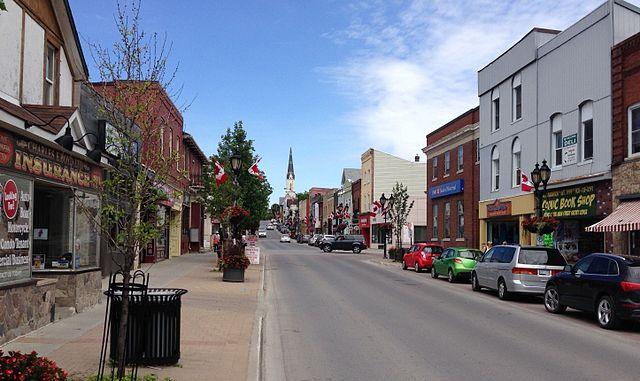
Owners sometimes compare an MPAC assessed value to a conclusion reached by commercial building appraisers in Grey County and ask why they differ. Timing, purpose, and methods explain most gaps. MPAC works from a uniform reference date and a mass appraisal model that smooths out outliers. An appraisal studies the exact property on the valuation date with far more granularity. For a property with a just-renewed anchor lease, an environmental encumbrance, or recent capital upgrades, the appraised value may sit above or below the MPAC figure for sensible reasons.
Local patterns that shape value across Grey County
Grey County covers urban nodes like Owen Sound and Hanover, lakeside communities such as Meaford, and fast-growing areas in Southgate and West Grey. That diversity drives different rent profiles and risk premiums inside a relatively tight geography.
- Retail streets in downtown Owen Sound still trade on visibility and walkability, but many tenants lean toward service or food uses rather than soft goods. That affects turnover allowances and tenant improvement budgets built into valuation.
- Highway commercial around Hanover and along Highway 26 near Meaford supports quick service restaurants and fuel, often on ground leases or with franchisee covenant considerations. In these cases, credit quality and lease term stability influence the cap rate more than the building’s age.
- Small to mid-bay industrial buildings see consistent demand from trades, logistics, and light manufacturing that support the regional agricultural base. Clear heights may be modest, but functional loading and yard space can outweigh premium finishes.
- For commercial land, access and servicing availability matter more than parcel size alone. Unserviced land at the edge of settlement areas may hold long-run potential, but absorption timelines and development charges can materially reduce present value.
Seasonality plays a role. Tourism and cottaging add summer foot traffic to Meaford and Georgian Bay facing areas, but appraisers tend to underwrite on annualized trends rather than cherry-picking peak months. Winter maintenance costs and snow load considerations show up in expenses and reserves, even on newer metal buildings.
How appraisers decide which methods to use
A thorough commercial property assessment in Grey County relies on three canonical approaches. The art lies in weighting them based on the property’s economics and data quality.
- Income approach. For income-producing assets, this is usually the driver. Appraisers normalize rent rolls, adjust to market rents where necessary, estimate stabilized vacancy, and model operating expenses and non-recoverables. The net operating income is then capitalized using a market-derived cap rate, or discounted via a DCF if cash flows vary over time.
- Sales comparison. When reasonably similar sales exist, paired with good verification, this approach corroborates or sometimes leads. Industrial condos, small freestanding retail, and basic office buildings often benefit here, as do serviced commercial lots where unit pricing can be benchmarked in dollars per square foot or per acre.
- Cost approach. Especially relevant for special-purpose assets or newer construction where depreciation is easier to model. In rural parts of Grey County, replacement cost new less depreciation can anchor value for buildings with limited comparable sales, though land value and functional obsolescence must be handled carefully.
In practice, an appraiser will usually present at least two approaches, explain data strengths and weaknesses, and reconcile to a final value that accords with market behavior. A lender underwriting a refinancing in Meaford on a stabilized single-tenant building with eight years of term remaining will likely look to the income approach first, while a municipality reviewing a site acquisition for a future works yard may emphasize sales and cost.
The mechanics of the income approach, with local nuance
Income analysis begins with the lease file. Grey County presents a mix of gross, semi-gross, and triple net structures. Older main street buildings may have legacy gross leases that look high until you net out landlord-paid utilities and maintenance. Newer industrial leases trend net, with tenants covering taxes, insurance, and most maintenance, while landlords retain capital replacements.
Vacancy allowances should be anchored in observed downtime. If similar bays in Hanover have been turning over in three to six months, underwriting a five to eight percent structural vacancy and credit loss can be appropriate. A single-tenant property with a long-term, investment-grade covenant may warrant less. Experienced appraisers will differentiate between physical vacancy and economic downtime related to free rent or step-ups.
Operating expenses need full reconciliation. In older building stock, reserves for roof, parking, and mechanical systems can be the difference between a glossy pro forma and a durable valuation. Snow removal, landscape, and waste contracts in Grey County reflect winter severity and dispersed vendor networks, which can run higher per square foot than in dense urban cores.
Capitalization rates live where risk, growth prospects, and liquidity intersect. Across Southwestern Ontario secondary markets, cap rates on stabilized small-bay industrial and neighborhood retail often sit in the mid to high single digits, with well-located, long-leased assets occasionally trading tighter. Unique properties with specialized build-outs or tenant rollover risk often push wider. The point is not to fixate on a number, but to support the selected range with verified sales, reported yields, lender feedback, and current bid-ask observations.
A brief example from practice helps. A 12,000 square foot light industrial building near the Highway 10 corridor in Grey Highlands recently renewed two of three tenants on five-year net leases. Market rent evidence suggested the remaining under-market tenant would step up upon rollover in eighteen months. The appraiser modeled a two-year DCF that captured the interim under-recovery and anticipated downtime at re-lease, then reconciled that result with a stabilized direct cap at the projected year three NOI. Both methods converged within a narrow band, adding confidence to the conclusion.
Valuing commercial land in a county shaped by servicing and policy
Commercial land appraisal depends on identifying its highest and best use under four tests: physically possible, legally permissible, financially feasible, and maximally productive. In Grey County, the legally permissible bucket deserves extra attention. The County Official Plan sets the big picture, but each lower-tier municipality maintains zoning by-laws, site plan control policies, and development charge regimes that directly influence value.
Key filters include access to municipal water and sewer, or the need for private systems. Where private septic is contemplated, constraints on restaurant uses or high-flow medical clinics can clip value, because the tenant universe narrows. Frontage on provincial highways brings MTO access rules into play, which can change site layout and timelines. Conservation authority mapping near watercourses or wetlands can trigger setbacks or reduce developable area. In Meaford and Georgian Bluffs, proximity to the Bay delights end users but often adds regulatory layers. Each of these realities shifts a buyer’s calculus.
Sales comparison remains the backbone for commercial land appraisers in Grey County, but adjustments require care. Corner lots with signalized access typically command a premium. Deep lots may underperform on a per square foot basis if they produce residual land that cannot be economically used without easements or lot line adjustments. Assemblies rarely price as the sum of their parts, because the friction of time and legal work dilutes the premium. The best appraisals demonstrate a working understanding of these mechanics, not just a parade of comparables.
Where inside knowledge can add real value is in tracking absorption and entitlement timelines. A developer who bought two acres fronting Highway 6 might pay less than a downtown pad buyer on a per square foot basis, yet reach a higher project IRR if approvals and construction can commence within a short horizon. Appraisers do not guess at these inputs, but they do interview municipal planners, check council agendas, and verify with brokers and lawyers who have just been through the process.
Cost approach and building condition, boiled down to what matters
Replacement cost new less depreciation offers another lens, particularly for single-user buildings that do not trade often. Current construction costs for basic pre-engineered metal industrial buildings in Southwestern Ontario have moved meaningfully over the past few years due to materials and labor. Rather than quote a figure that ages quickly, good reports cite up-to-date cost guides, recent tender results where available, and local contractor feedback, then layer in soft costs and developer profit.
Depreciation splits into physical, functional, and external components. A worn roof or dated HVAC shows up as physical depreciation. Functional issues include inadequate power for modern equipment, a poor column grid, or insufficient loading. External obsolescence can flow from adjacent land uses, noise, or even regional logistics shifts that push truck traffic away. In Grey County, snow load design and envelope performance deserve attention, because a building that skimps here will carry higher long-run costs. When a buyer budgets for a replacement roof within five years, the market quietly translates that into a lower price today, even when NOI looks healthy.
What lenders and investors expect in a Grey County report
Institutions that lend or invest in secondary markets like Grey County do not demand fluff. They want clear support for rent, expense, and cap rate assumptions, sensible discussion of risk, and clean reconciliation. Two to three comparable sales that actually resemble the subject are better than six pulled from far afield with heroic adjustments. For lease comps, proximity and recency matter, but so does tenant type and build-out complexity.
Narrative sections should explain zoning and permitted uses in plain language, summarize any site plan or building permit history, and flag environmental or title issues early. If the property is on private services, the appraiser should state that directly and discuss any capacity constraints that affect tenancy. When a report reaches a reviewer’s desk with holes in these areas, it tends to bounce back.
A straightforward appraisal process from first call to final PDF
When you engage commercial appraisal companies in Grey County, the best experiences usually look similar. Clarity at the start saves time later, and a little preparation on the client side compresses timelines without sacrificing rigor.
Here is the typical sequence you can expect:
- Scope and quote. You describe the property, the purpose, the required timing, and any report format constraints. The appraiser confirms intended use, limiting conditions, and a fee based on complexity.
- Document intake. You send leases, rent roll, expenses, plans, surveys, and any environmental or building reports. The appraiser reviews and prepares targeted follow-up questions.
- Inspection. A site visit verifies areas, photos, building systems, access, and neighborhood context. For land, the appraiser checks topography, frontage, and evidence of servicing.
- Analysis. Market research, comparable selection, income modeling, and, where appropriate, cost calculations. The appraiser cross-checks conclusions with broker calls and public records.
- Draft and final. Findings are reconciled, a draft may be shared for factual accuracy, then the final signed report is delivered to the client identified at engagement.
If a partner at one of the commercial building appraisers in Grey County says they can skip the inspection and deliver in 48 hours on a complex asset, that is a red flag. Speed matters, but so does defensibility.
Documents that make your valuation faster and stronger
Time and again, the same handful of documents determine whether an appraisal sails through or stalls. Gather these before the engagement:
- Current rent roll and all active leases, plus any recent offers or amendments
- Last two years of operating statements and a current-year budget
- A recent survey or site plan and the most current floor plans
- Any environmental reports, building condition assessments, and capital project summaries
- A package of municipal correspondence for ongoing planning or permitting files
When these arrive early, the appraiser can focus on analysis rather than chasing paper. They also reduce the risk of mismatches between what the model assumes and what the lease actually says.
Edge cases and judgment calls that separate boilerplate from expertise
Every market has properties that do not fit the neat buckets. In Grey County, a few pop up repeatedly.
A converted downtown building with upper-floor residential and main-floor commercial demands careful apportionment of income and expenses by use. Financing terms can differ by component, and buyer pools do too. Tenant inducements and residential rent control rules nudge cash flows in different directions, which the valuation needs to capture.
Owner-occupied industrial often trips clients up. The temptation is to capitalize business profits rather than market rent for the real estate. Experienced appraisers separate the operating company from the property, use market rent for the space as if leased at arm’s length, and then build value from there. If the owner plans a sale-leaseback, the proposed lease must be tested against market to avoid over- or under-stating value.
Environmental history can be subtle. A past automotive use or a dry cleaner nearby does not automatically depress value, but lenders will want clarity. Phase I environmental site assessments, even when clean, affect perceived risk. On land sites, closed municipal landfills mapped decades ago occasionally turn up within study areas. Appraisers should search public databases and talk to municipal staff, not rely on assumptions.
Ground leases sit in their own category. Where a national brand sits on land under a long-term ground lease, the improvements and the leased fee interest in the land may be held separately. The cash flows split, and so do the cap rates. Reports need to disaggregate those pieces and respect the lease terms.
Choosing the right expertise for your asset and purpose
Not every firm is built for every assignment. Commercial appraisal companies in Grey County range from one or two appraisers with deep local files to larger regionally focused practices that tap broader databases. For a simple financing on a small-bay industrial condo, a boutique with local insight may deliver exactly what you need. For an expropriation, litigation, or a portfolio-level refinance, a firm with designated AACI appraisers, litigation experience, and strong report production might be worth the premium.
Ask about data coverage. Do they maintain current rent comp libraries for Owen Sound and Hanover, or are they leaning on provincial averages that wash out local nuance? Ask how they confirm cap rates: broker interviews, closed sale verification, lender feedback, or just online listings. For commercial land appraisers in Grey County, dig into how they analyze servicing, development charges, and entitlement timing. A candid conversation up front will usually signal whether the appraiser’s process fits your risk and timeline.
Practical pricing and timing expectations
Fees scale with complexity, report type, and deadline pressure. A narrative report for a straightforward, stabilized single-tenant building might sit at the lower end of an appraiser’s fee range. Multi-tenant, mixed-use, or special-purpose assets push the fee higher. Land files with tangled zoning or servicing questions take time to resolve and are priced accordingly. Rush fees exist for a reason. If a lender needs final delivery in ten business days, the team has to triage other files or work overtime.
As for timing, plan on two to three weeks from engagement to delivery for a routine assignment with prompt document flow. Seasonal bottlenecks can slow public records access and comparable verification. During busy cycles, a call to the firm’s coordinator to pin down inspection dates and draft review windows pays off.
A few words on working with your tax assessment
Most owners want to know how their MPAC assessment stacks up against market value. While MPAC and appraisal serve different ends, the data overlaps. If you believe your assessed value does not reflect your property’s reality, most appraisers can help prepare a well-supported Request for Reconsideration. They will not promise a reduction, but they can flag where MPAC’s model may not capture a long-term vacancy, functional obsolescence, or a significant encumbrance. The same market evidence used in a financing appraisal can strengthen your tax appeal, provided the valuation dates align with MPAC’s base year rules.
Where the rubber meets the road
Valuation lives at the intersection of market evidence and judgment. In Grey County, the evidence set includes recent trades along 16th Street East in Owen Sound, new industrial leasing in Hanover’s business park, land activity near Dundalk where growth has accelerated, and main street retail adjustments as tenant mixes evolve. Judgment shows up in how an appraiser handles a short remaining lease term with a strong tenant, or a property that looks good on paper but sits beside a heavy truck route that rattles windows and nerves.
If you keep the core distinctions in mind, engage early, and provide clean documents, a commercial building appraisal in Grey County can be both efficient and insightful. The report should not only state a number, it should give you the story behind that number, the sensitivities that might move it, and the markers to watch in the next twelve months. That is the kind of analysis that helps an owner decide whether to refinance now or wait, a buyer weigh two sites with different entitlement paths, or a lender price a deal with confidence.
The county’s mix https://zanderfdep831.wpsuo.com/prepare-for-site-visits-a-commercial-appraiser-grey-county-field-guide of established towns and growth corridors will keep appraisers busy for years. As the market shifts, lean on practitioners who know the difference between a spreadsheet and a street corner, who will call a planner before making a zoning assumption, and who can explain, in plain words, why the property is worth what it is worth on the day it matters. That blend of rigor and local feel is what separates a template from a trusted opinion, and it is exactly what you should expect from commercial building appraisers in Grey County.